
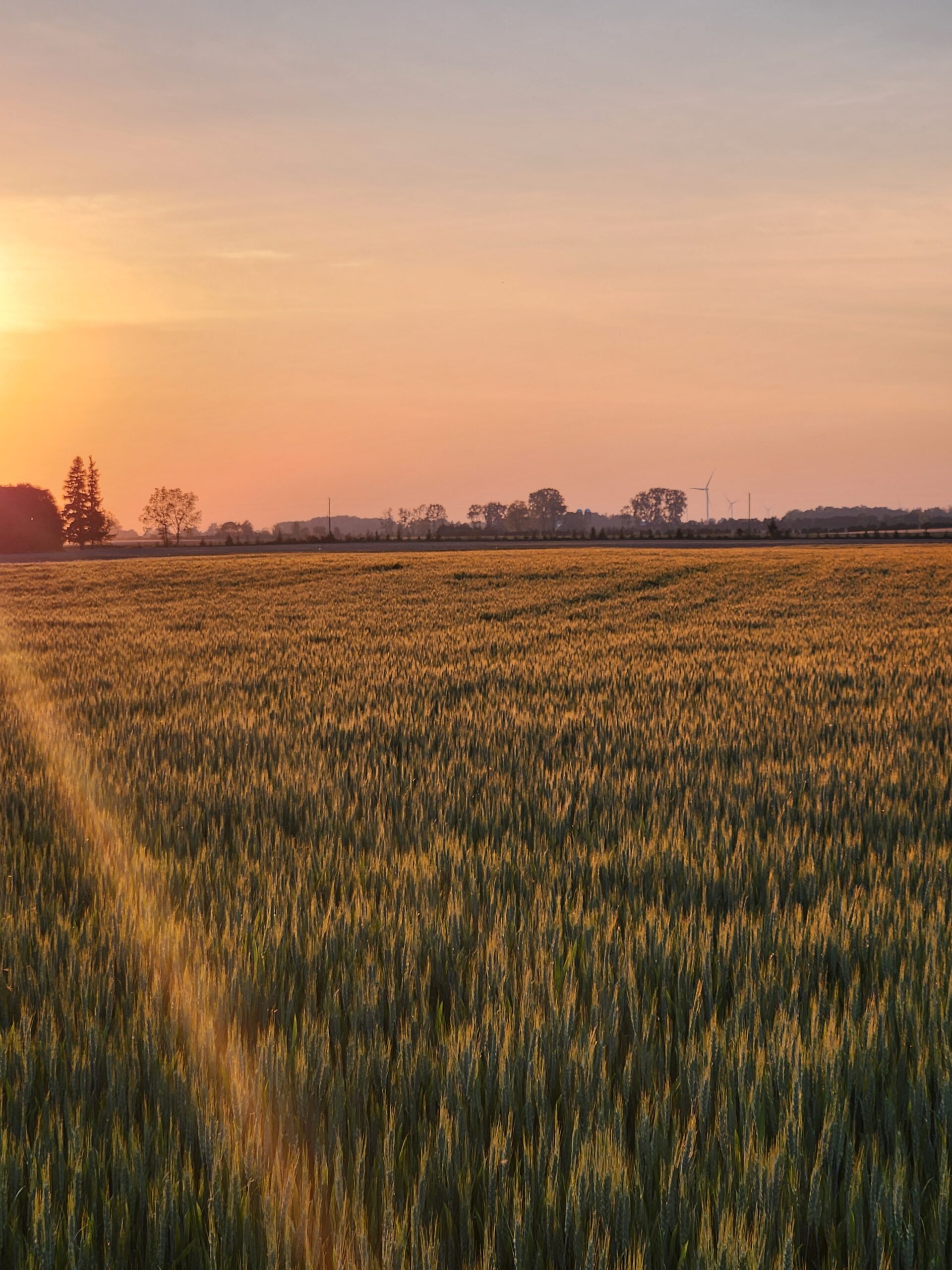
Below are a few things to consider as wheat harvest is fast approaching!
1. Combine & Header Preparation
-
- Routine Maintenance: Check belts, pulleys, chains, and sprockets. Replace any frayed or damaged wear parts to prevent mid-season breakdowns.
- Lubrication: Sufficiently grease bearings and moving parts to avoid friction and potential fire hazards.
- Header Setup: Install and calibrate wheat-specific headers. Inspect knife sections, guards, and hold-downs. Replace severely rounded edges to ensure a clean, scissor-like cut.
- Threshing System: Check concave wear and adjust clearance to match crop conditions. Make sure the rotor and feeder house chains are properly tensioned.

2. Grain Storage & Handling
-
- Bin Cleaning: Completely remove old grain, dust, and debris from floors, aeration systems, and wall stiffeners to deter pests and mold. Sprinkle diatomaceous earth to kill storage pests.
- Infrastructure Check: Inspect grain bins, lids, and doors for leaks, holes, or rust. Tighten loose hardware and cables.
- Aeration & Fans: Clean ventilation systems, test aeration fans, and check temperature sensors to ensure proper moisture management during storage.
- Equipment Inspection: Test augers, portable elevators, and grain carts to ensure belts and auger flighting are in working order.
3. Safety & Logistics
- Fire Extinguishers: Ensure all self-propelled equipment (combines, tractors) is equipped with fully charged, accessible fire extinguishers.
- Lights & Road Safety: Test all flashers, turn signals, and headlights. Ensure Slow Moving Vehicle (SMV) emblems are clean and unfaded.
- Wagon bearings and tires: Check tire pressures and bearings for being road ready. Better to find them before harvest, and not when a full wagon is at road speed.