
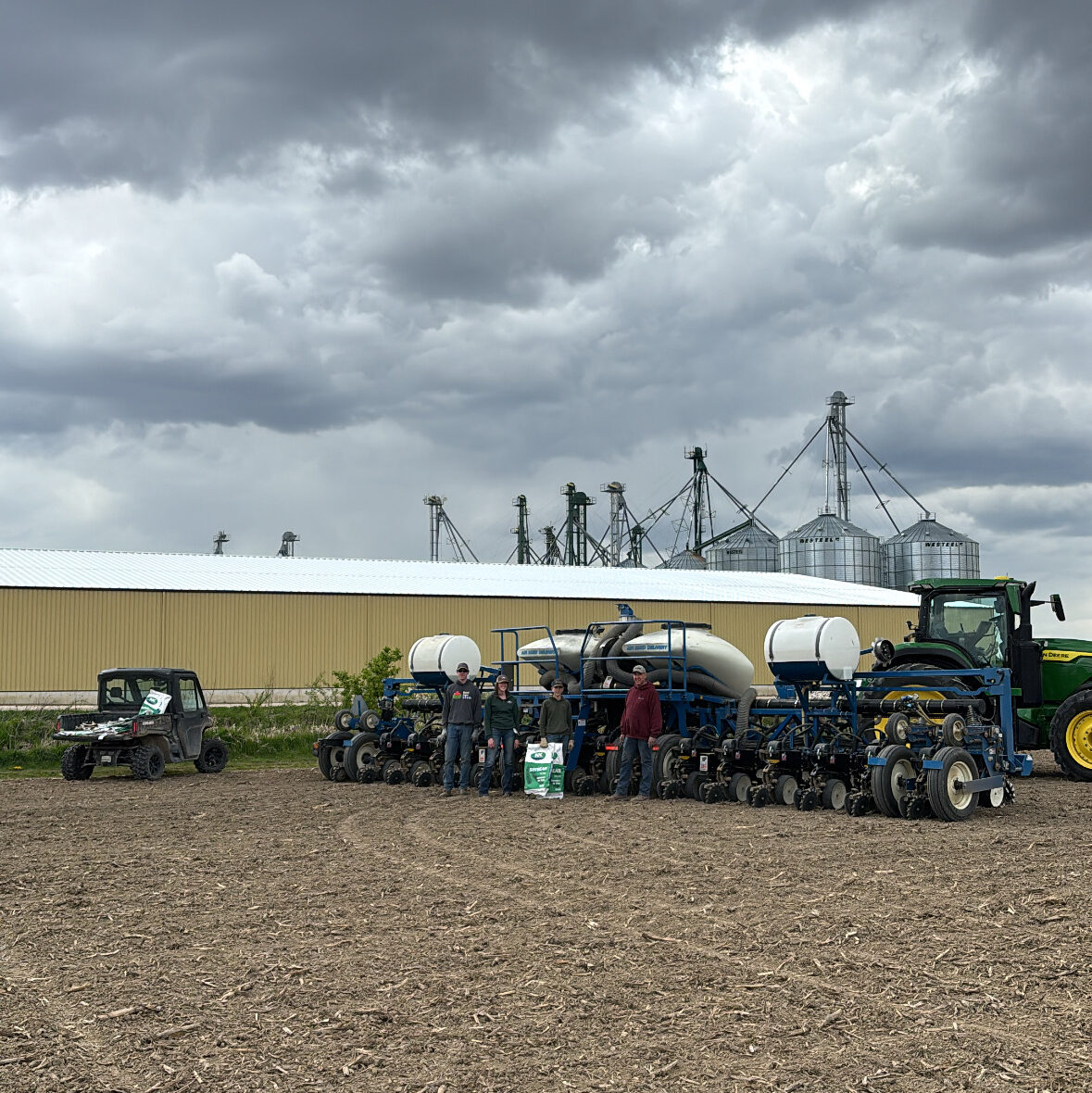

Wishing everyone a safe planting season!
We took some time yesterday afternoon to plant a plot here in Dresden showcasing 11 NK soybean varieties. Stay tuned for updates!
Wishing everyone a safe planting season!
We took some time yesterday afternoon to plant a plot here in Dresden showcasing 11 NK soybean varieties. Stay tuned for updates!
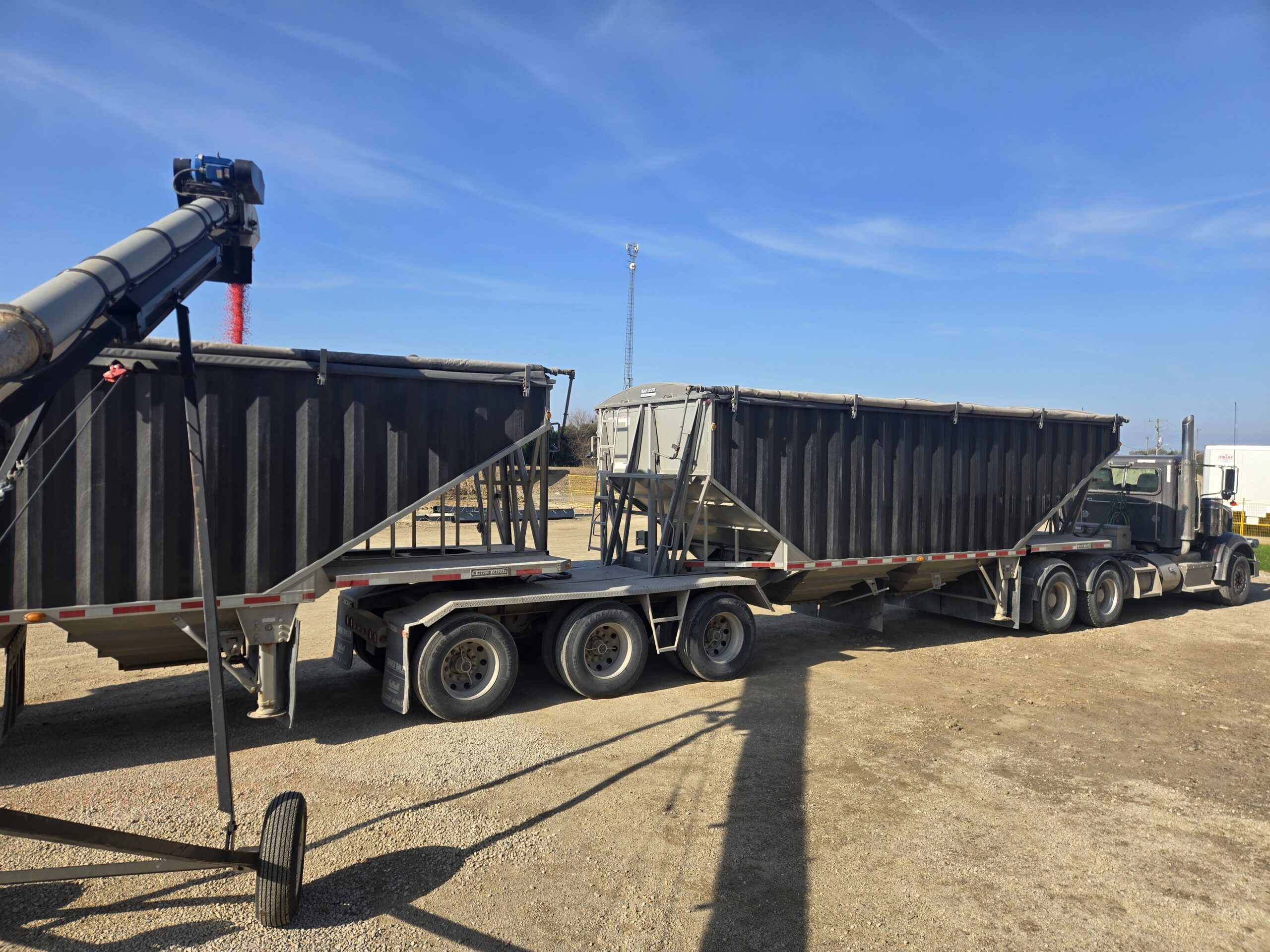
Seed Pickup is happening with the good weather. Going out in vans, trailers and wagons. We are excited to see everyone getting ready for spring!


Interest in planting soybeans earlier than the traditional window continues to grow across Ontario. Research consistently shows yield advantages to earlier planting, but those benefits come with agronomic and financial risks—especially on heavy clay soils common across much of the province.
Before committing to ultra‑early or early soybean planting, growers should step back and answer three key questions:
The primary driver behind early soybean planting is yield potential. Soybeans are photoperiod‑sensitive, meaning earlier planting allows more time for vegetative growth and node development before flowering is triggered after the summer solstice. More nodes typically translate into more pods and higher yield potential.
Ontario research consistently shows that maximum soybean yields are achieved when planting occurs from late April through the first half of May, with yield declining steadily as planting is delayed into late May and June.

Figure 1. Typical soybean yield response to planting date in Ontario. Yield potential remains near maximum when soybeans are planted in late April and early May, then declines as planting is delayed into late May and June. Research consistently shows that delayed planting shortens the reproductive period and reduces yield potential, even when final plant stands are adequate.
Source: Ontario field data and University of Wisconsin Cool Bean research. Agronomic interpretation adapted by NK®.
This figure highlights a key takeaway: soybeans lose yield potential quickly when planting is delayed. While soybeans can compensate for moderate stand losses, they cannot compensate for lost time once the growing season shortens.
Key takeaway:
Early planting increases yield potential by extending the crop’s productive window. Particularly increasing plant biomass during the reproductive stages.
Early planting success depends far more on soil conditions and weather forecasts than on calendar date.
OMAFRA recommends planting soybeans when soil temperatures are near 10°C and trending upward. Cold soils slow emergence and increase the risk of imbibitional chilling injury.
Heavy clay soils:
On cold, wet clay soils, early‑planted soybeans may take 20–28 days to emerge, significantly increasing exposure to disease and early‑season stress.
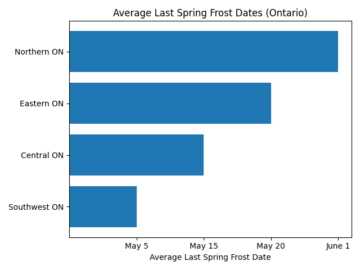
Figure 2. Average last spring frost dates across major Ontario regions. Frost risk extends into mid‑to‑late May in Central, Eastern, and Northern Ontario, increasing the likelihood that very early‑planted soybeans may emerge prior to the final frost event. Regional frost timing is a key factor when evaluating early soybean planting risk.
Source: OMAFA climate normals and regional agronomy research. Agronomic interpretation adapted by NK®.
Soybeans can tolerate brief exposure to temperatures around ‑2 to ‑3°C, but injury risk depends on growth stage, soil moisture, and duration of cold temperatures. Planting early increases the likelihood that soybeans will emerge before the final frost, particularly outside of Southwestern Ontario.
Key takeaway:
The calendar may say “early May,” but frost and cold soil risks can still be very real—especially on clay soils and outside of Southwestern Ontario.
Early soybean planting often increases yield potential, but it also increases exposure to early‑season variability.
Ontario and University of Wisconsin research both show that:
Early planting may be the right strategy when:
Early planting carries higher risk when:
Key takeaway:
Early planting should be intentional and selective, not automatic.
Early soybean planting can be a strong yield‑building strategy in Ontario when conditions are right. The data clearly shows that planting earlier preserves yield potential, but frost risk, soil temperature, drainage, and weather forecasts must drive the decision—not the calendar.
The goal is to plant soybeans as early as conditions allow, not as early as possible.
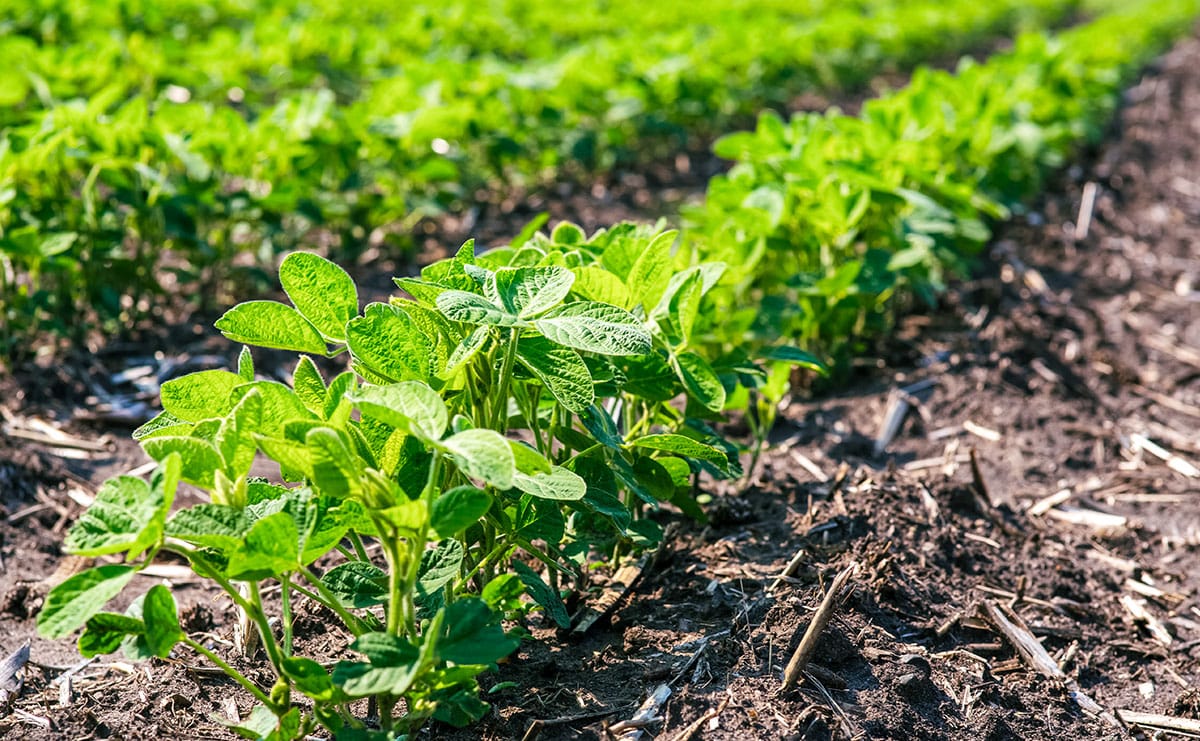
At the Commodity Classic this year NK launched the promotion for the new generation of herbicide tolerance in soybeans. Labelled as EXPANCE, the next generation soybeans will have resistance to E3 (2,4-D), Liberty (Glufosinate) and multiple HPPD herbicides (such as Bicyclopyrone). If you want to stay up to date on further press releases you can sign up to notifications from Syngenta. Release to growers is anticipated for the 2029 growing season.

Today marks the 10th annual Canadian Agriculture Day!
Canadians across the country are encouraged to join in celebrating Canadian agriculture on social media, using #CdnAgDay and sharing photos, stories, and more!
More information about Canadian Agriculture Day can be found by following this link: https://www.foodintegrity.ca/canadas-agriculture-day/

We are very excited to see that Syngenta’s new Soybean Cyst Nematode (SCN) and Sudden Death Syndrome (SDS) seed treatment is registered in Canada. Victrato will be paired with Syngenta’s Vayantis IV fungicide to provide a complete package. This product will be available on limited NK Brand soybeans in 2026. Follow the link below to learn all about the rates and efficacy for this new product.

A summary of today’s USDA report follows.
Market Impact:

It’s very clear that when trying to prevent establishment of waterhemp in your field that using multiple modes of action for herbicides and pre-emergent herbicides is important. Expecting to control outbreaks of large actively growing waterhemp with 2,4-D or Liberty in season is not sustainable. The selection pressure for promoting resistance in the weed populations is too risky.
University of Illinois has confirmed 4 populations of waterhemp that are resistant to herbicides from 8 different chemical classes, with Glufosinate (Liberty) being the most recent.
Missouri is the 4th state to confirm Dicamba resistance in Waterhemp populations.
https://extension.missouri.edu/news/mu-weed-science-team-confirms-dicamba-resistant-waterhemp
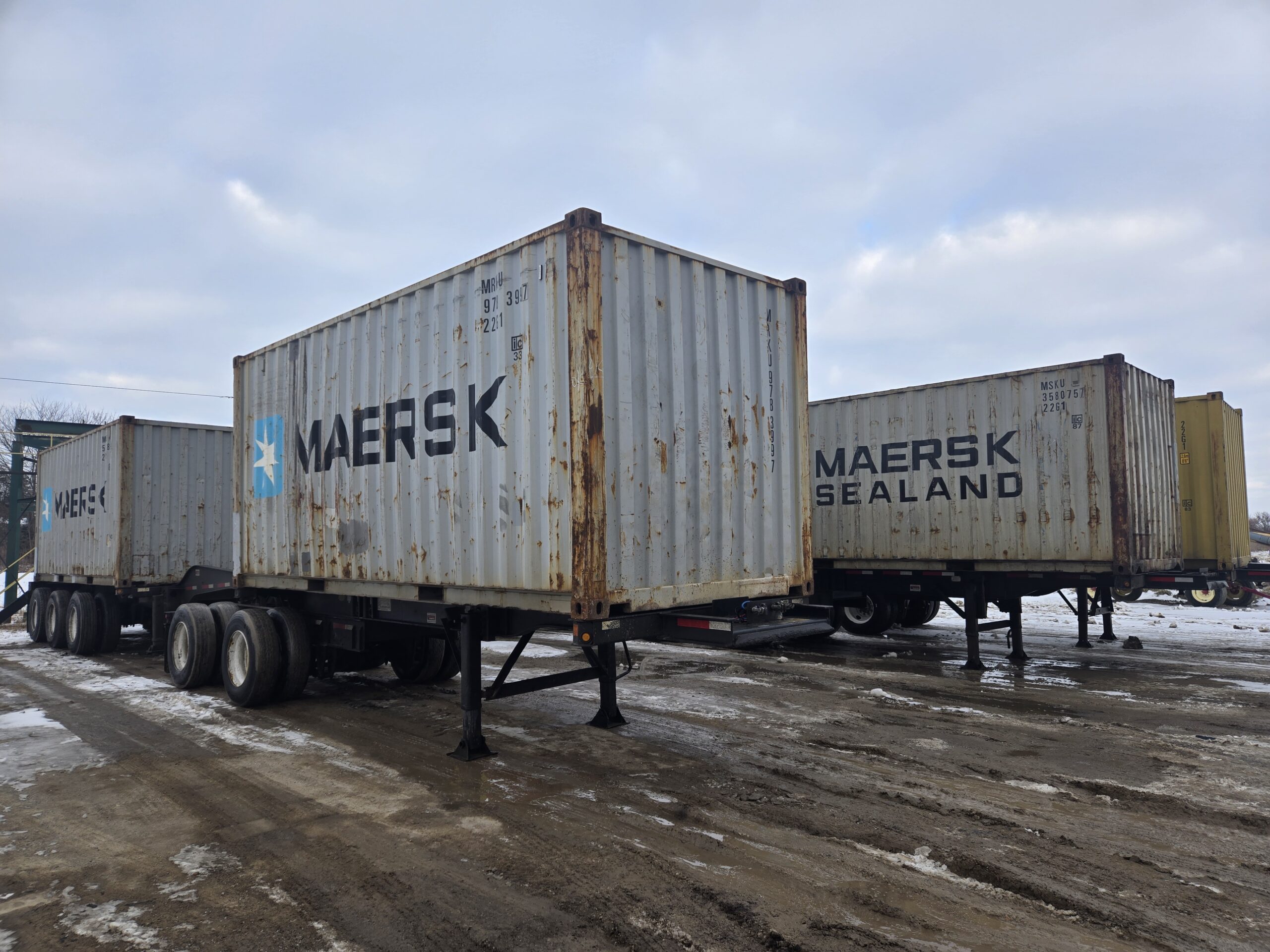
Below is a link to the Farmer’s Forum column written by Steve Kell. In the article it stresses that we can’t compete on volume of crushers with South America and the US, and we should embrace niche markets and our export ability. Jackson Seed Service is excited to work with farmers for the past 40+ years and be a part of these successful markets.
STEVE KELL: Our competitive advantage is moving 900 shipping containers each week
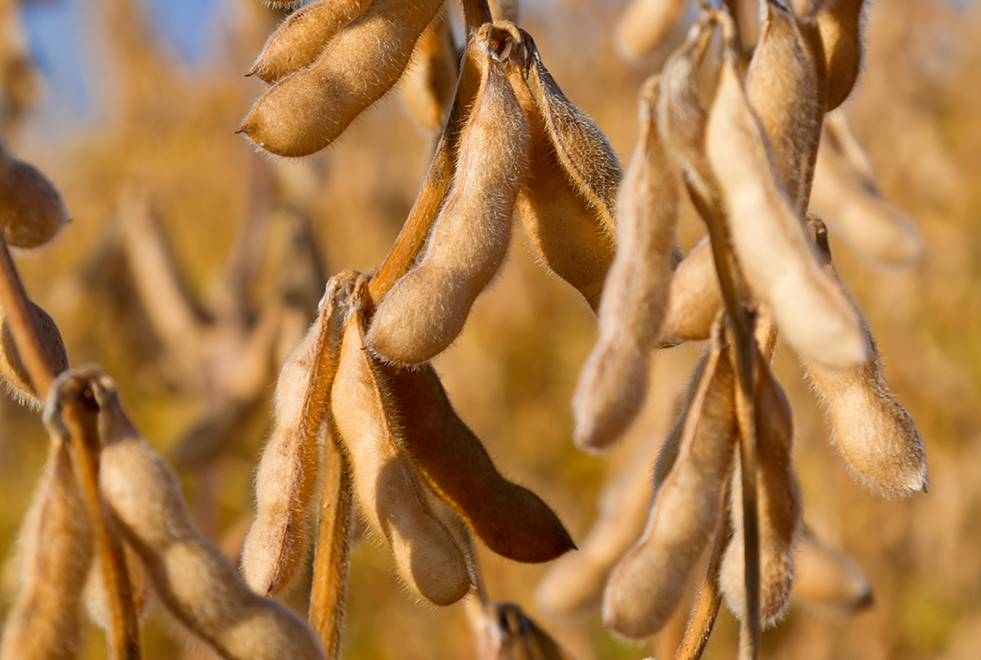
Looking for variety plot data? The OCC have published the 2025 soybean plots on https://soybean.gocrops.ca/
Find your maturity and if you are looking for traited or IP beans.